













The Definitive Guide to Mine Liquidation


THE MINE LIQUIDATORS JOURNAL
The Definitive Guide to Mine Liquidation
Recovering Value. Preserving History. Powering the Future.
By Shane Wade
Owner, Mine Liquidators
THE DEFINITIVE GUIDE TO MINE LIQUIDATION
Recovering Value. Preserving History. Powering the Future.
“Every mine closes eventually. The question is not whether you plan for that day—but whether you’re prepared when it arrives.”
— Shane Wade
FOREWORD
Mining is one of humanity’s oldest and most essential industries. Long before cities reached toward the sky, before highways crossed continents, before electricity illuminated our homes or satellites orbited the Earth, miners were extracting the stone, copper, iron, coal, gold, and countless other minerals that made modern civilization possible. Every bridge begins with raw materials.
Every automobile. Every wind turbine. Every smartphone.
Every hospital. Every school. Behind virtually every part of modern infrastructure is an industry that has spent centuries finding, extracting, processing, and moving the resources the world depends upon.
Yet every mine, regardless of its size, commodity, or success, shares one unavoidable reality. One day, production ends. For some operations, that day comes after only a few years.
For others, production continues for generations. The reasons mines close vary. Ore bodies may become uneconomic to extract. Commodity markets change. Operating costs increase. Technology changes. Regulatory or environmental requirements evolve. Ownership changes can also alter the future of an operation. Whatever the reason, eventually every mine reaches a final operational chapter.
To someone outside the industry, that can look like the end of the story. After spending my career working with mining equipment and industrial assets, I’ve come to see it differently. Mine liquidation isn’t necessarily the end of a story.
It can be the beginning of another one. Equipment that served one operation may have years of useful service remaining. A processing plant may have components that can be relocated.
A conveyor system may find another application. A machine that appears destined for scrap may turn out to be exactly what another operation has been searching for. The challenge is recognizing that value before it’s gone.
That’s what mine liquidation is really about.
THE PHONE CALL THAT CHANGED EVERYTHING
If you had told me early in my career that one of the most defining projects I’d work on would begin with an eBay listing, I probably would have laughed. Around 2007, I was involved with the former Classic Coal Preparation Plant near Pittsburgh, Illinois. It was a major industrial facility, and like many facilities that have reached the end of their original operation, it faced an uncertain future.
There was a lot of equipment there. Steel. Conveyors.
Processing equipment. Motors. Structures.
Systems that had been designed, fabricated, installed, maintained, and operated over many years. To some people, an idle facility can look like a collection of old equipment. I saw something different.
I saw value. The important question wasn’t simply what the equipment was worth where it stood. The question was:
Who could use it somewhere else? So we did something that was unconventional at the time. We listed the plant on eBay.
An entire coal preparation plant. Not exactly the kind of thing most people associated with an online auction site. Then something happened that changed the way I looked at marketing industrial equipment.
An engineer from Jim Walter Resources near Birmingham, Alabama, discovered the listing. That initial contact eventually led to the sale of the preparation plant. But selling the equipment was only the beginning.
The project required planning. The plant had to be dismantled. Equipment had to be identified and prepared for transportation.
The logistics had to be coordinated. And ultimately, the equipment was transported and reconstructed for continued use. For me, the lesson was bigger than the sale itself.
It demonstrated what can happen when you put the right equipment in front of the right buyer. The buyer doesn’t necessarily have to be next door. They may be in another state.
Another country. Or somewhere you never expected. That experience reinforced something I’ve carried throughout my career:
The value of mining equipment isn’t determined solely by where it sits. It’s determined by what it can still accomplish. And that is one of the fundamental ideas behind mine liquidation.

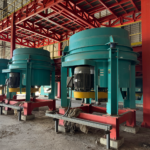
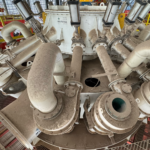
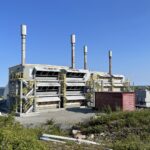
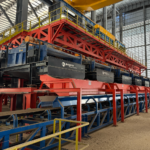
An industrial processing facility illustrates the complex equipment and systems considered during mine-liquidation planning.
FIELD NOTE — SHANE WADE
THE COAL PREPARATION PLANT THAT SOLD ON EBAY
Looking back, the eBay listing seems almost obvious. At the time, it wasn’t. We were dealing with large-scale industrial equipment, and the traditional methods of marketing equipment were very different from what they are today.
That project taught me that creative marketing can open doors you never expected. It also taught me that you shouldn’t assume you know where your buyer is going to come from. Sometimes the right buyer is looking in a place nobody else thought to look.
WHAT MINE LIQUIDATION REALLY MEANS
The phrase mine liquidation can mean different things depending on the operation and circumstances involved. At its simplest, mine liquidation involves identifying and managing the disposition of assets associated with a mining operation that is closing, downsizing, restructuring, or otherwise changing its operations. Those assets can include far more than mobile equipment.
They can include:
- Crushing equipment
- Screens
- Conveyors
- Feeders
- Pumps
- Motors
- Electrical equipment
- Processing equipment
- Grinding equipment
- Material-handling systems
- Mobile mining equipment
- Rail and rolling stock
- Buildings and structures
- Spare parts
- Components and assemblies
The process may involve selling equipment individually, selling groups of related equipment, relocating complete systems, recycling materials, or finding other productive uses for assets. Every project is different.
That’s why experience matters.
MINE LIQUIDATION IS MORE THAN SELLING EQUIPMENT
One of the biggest misconceptions about liquidation is that the process begins and ends with putting a price on a machine. In reality, determining what happens to an asset requires asking several questions. What is it?
The first step is knowing exactly what you have. Manufacturer. Model.
Serial number. Specifications. Configuration.
History. Accessories. Supporting components.
What condition is it in? Age is important, but age alone doesn’t tell the entire story. Maintenance history, operating hours, condition, availability of replacement components, and previous use can all affect an asset’s usefulness and marketability.
Who needs it? This is where the global nature of the mining equipment market becomes important. A piece of equipment that no longer fits one operation may be valuable to another.
Can it be moved? A machine can have considerable value on paper but become considerably more difficult to sell if transportation, dismantling, loading, or reassembly presents major challenges. What happens if it isn’t sold?
Scrap and recycling may be appropriate in some circumstances. But that shouldn’t automatically be the first answer. Before equipment is reduced to scrap, it is worth determining whether someone else can put it back to work.
“The end of production doesn’t have to mean the end of value.”
WHY MINING EQUIPMENT STILL HAS VALUE
Mining equipment is built for demanding environments. That means many machines and systems are engineered with durability and long service lives in mind. But durability alone doesn’t create value.
Knowledge creates value. Knowing what a machine is. Knowing what it was designed to do.
Knowing what condition it is in. Knowing where similar equipment is being used. Knowing who might need it.
And knowing how to get it from one location to another. Those pieces of information can make the difference between a valuable asset and a scrap pile. I’ve seen that difference firsthand.
FIELD NOTE — THE 1929 GEARBOX
During a dismantling project at the Port of Long Beach, California, we completed a large-scale conveyor belt removal operation involving nearly 30,000 linear feet of conveyor belt. By the third day, everything was going according to plan. It had been a great day—we had already wound more than 8,000 feet of conveyor belt when disaster struck.
Or so we thought. Without warning, our belt winder suddenly failed. When we disassembled the gearbox, we discovered something completely unexpected.
The gearbox had been manufactured in 1929. It had been doing its job for decades before finally reaching the end of its service life. After sourcing a replacement gearbox and losing two days, we were finally back to work.
Looking back, it’s hard not to appreciate the irony. A piece of equipment manufactured in 1929 had worked for decades before choosing that particular day to retire. The experience reminded me of something I’ve seen repeatedly throughout the mining industry.
Equipment doesn’t always fail because of poor design. Sometimes it simply outlives everything around it.

Conveyor belt material ready for recovery, transportation, reuse, or recycling.
FACT OF THE DAY
A linear foot is simply one foot measured along the length of an object. In large conveyor projects, describing belt quantities in linear feet helps communicate the enormous scale of material being removed, transported, and potentially reused.
FIELD NOTE — THE MACHINE THAT WASN’T SCRAP
One of the most valuable lessons I’ve learned in this business came from equipment that everyone believed was worn out. While inspecting equipment for a potential liquidation project, we found several machines that appeared to be at the end of their useful lives. The assumption was simple:
Scrap it. But before making that decision, we dug deeper. We researched serial numbers.
We contacted manufacturers. We investigated the equipment’s history. What we discovered changed the picture completely.
Some of the equipment was rare. Some of the models were highly sought after. Instead of selling the machines for scrap value, we marketed them to buyers around the world.
The results were dramatically different from what anyone had expected. The equipment recovered several times what its scrap value would have been. That experience reinforced one of the most important principles I’ve learned:
Knowledge can be worth far more than the steel itself. Before something becomes scrap, you need to know what it is.
FIELD NOTE — RELATIONSHIPS CREATE OPPORTUNITIES
If there is one lesson I would emphasize above all others, it is this: Relationships create opportunities long before equipment does. Over the years, I’ve learned that buyers rarely remember the lowest price.
They remember whether you were honest. They remember whether you answered the phone. They remember whether you returned a call.
They remember whether you told them the truth when something went wrong. And they remember whether you helped solve a problem when the situation became difficult. Mining is a relatively small world.
People talk. Reputations travel. A transaction ends.
A relationship can last for decades. That’s why I believe reputation is one of the most valuable assets any company in this industry can have. You can’t put it on a balance sheet.
But you can lose it in a day. And it can take decades to build.
FROM GERMANY TO TEXAS TO CALIFORNIA
My experiences with mining equipment have taken me far beyond a single mine or a single market. One of the defining experiences of my career was traveling to Germany to assist with the liquidation of former RAG mining operations in Bottrop and Marl. Walking through some of Europe’s largest underground coal mining facilities gave me a firsthand appreciation for the scale and complexity of global mining operations.
Thousands of tons of equipment. Massive infrastructure. Complex systems.
And an enormous amount of planning required to determine what could be recovered, what could be relocated, and what would ultimately remain behind. Experiences like that changed the way I think about mine liquidation. It isn’t simply an equipment sale.
It is a project. And sometimes it’s an international project.
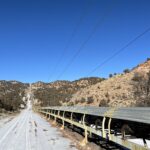
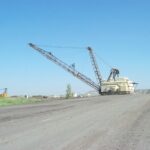
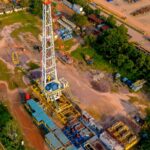
A working surface mine illustrates the scale of equipment, planning, and logistics involved across the mining lifecycle.
WHEN “LARGE EQUIPMENT” DOESN’T MEAN WHAT YOU THINK
I’ve had the opportunity to see some remarkable mining equipment during my career. Few machines change your perspective on scale quite like the Bagger 293, the enormous bucket-wheel excavator associated with Germany’s large surface lignite mining operations. Standing beside a machine of that magnitude changes your definition of the word large.
It’s one thing to read dimensions on a specification sheet. It’s something completely different to stand next to the machine itself. Mining has produced some extraordinary examples of engineering.
The machines are reminders of what happens when engineers, manufacturers, operators, mechanics, and entire mining communities work together to solve problems on a massive scale.

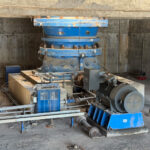
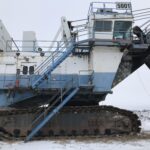
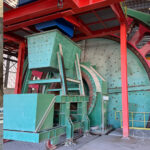
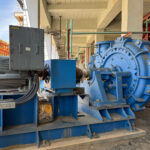
A close-up view of heavy equipment components underscores the engineering and inspection required to understand asset value.
A SUSTAINABLE APPROACH TO ASSET RECOVERY
Mine liquidation can also involve environmental responsibility. One example from my experience involved Martin Marietta’s Beckmann Quarry in San Antonio, Texas. Mine Liquidators removed and recycled more than 300 tons of fabric and steel-cord conveyor belt that had accumulated over decades.
The material had been destined for a landfill. Instead, we developed a recycling solution that kept the material out of the landfill while helping reduce disposal costs for the customer. Projects like this demonstrate that asset recovery isn’t always about selling equipment.
Sometimes the value comes from finding a better solution for material that otherwise becomes a disposal problem. Recycling isn’t necessarily the most appropriate answer for every material or every project, but when it is feasible, it can provide both environmental and economic benefits.

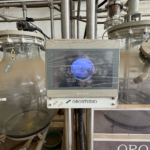
Careful equipment inspection helps identify opportunities for continued use, resale, or responsible recycling.
THE REAL CHALLENGE: SEEING WHAT OTHERS DON’T
This may be the most important idea in this entire guide. A mine may be closing. A processing plant may be idle.
A conveyor may have been removed from service. A machine may look old. A warehouse may be full of surplus parts.
None of those facts automatically tell you what something is worth. You have to investigate. You have to ask questions.
You have to understand the equipment. You have to understand the market. And sometimes you have to look at something differently from everyone else.
That is where experience becomes valuable.
COMMON MISTAKES IN MINE LIQUIDATION
Every project is different, but there are several mistakes that can reduce the value recovered from mining assets.
WAITING TOO LONG
Liquidation planning shouldn’t necessarily wait until the last day of operation. The earlier the process begins, the more opportunity there may be to document assets, identify buyers, plan dismantling, and coordinate logistics.
INCOMPLETE ASSET INFORMATION
A listing that simply says “used crusher” doesn’t tell a serious buyer very much. Manufacturer, model, serial number, dimensions, capacity, configuration, condition, and photographs can make an enormous difference.
LOOKING ONLY AT LOCAL BUYERS
The buyer for a specialized piece of equipment may not be located nearby. Modern communication and international logistics make it possible to reach markets far beyond the original operation.
ASSUMING EVERYTHING HAS SCRAP VALUE
Scrap may be the right destination for some materials. But valuable equipment should be evaluated before that decision is made.
UNDERESTIMATING LOGISTICS
Moving large mining equipment can be complicated. Dismantling, loading, transportation, permits, oversize loads, ports, international shipping, and reassembly each need consideration.
FAILING TO DOCUMENT EQUIPMENT
Photographs, serial numbers, specifications, maintenance information, drawings, and operating history can all help establish what an asset is and what opportunities may exist for it.
FREQUENTLY ASKED QUESTIONS
What is mine liquidation?
Mine liquidation is the process of identifying, evaluating, marketing, selling, relocating, recycling, or otherwise disposing of assets associated with a mining operation that is closing, downsizing, or changing its operations.
Does mine liquidation mean everything becomes scrap?
No. Equipment may be sold for continued use, relocated, sold for components, recycled, or ultimately scrapped depending on its condition, market demand, economics, and other factors.
Can an entire processing plant be relocated?
Yes. Depending on its design, condition, location, logistics, and economics, components or entire processing facilities can be dismantled and relocated for use elsewhere.
Is older mining equipment still valuable?
It can be. Age is one factor, but condition, rarity, specifications, availability, replacement cost, and market demand can also influence value.
Why are serial numbers important?
Serial numbers can help identify equipment accurately and may allow additional information about the machine to be researched.
When should a mine begin thinking about liquidation?
There is no universal timeline because every mine is different. However, beginning the evaluation process early can provide more time to document assets, understand options, identify potential buyers, and plan logistics.
WORD OF THE DAY — LIQUIDATION
In the context of business and industrial assets, liquidation generally refers to the process of converting assets into value through sale, disposition, recycling, or other means, often as part of a closure, restructuring, or change in operations. For mining, the word represents much more than simply selling equipment. It represents the transition from one chapter to the next.
CLOSING REFLECTIONS
Every mine tells a story. Some stories are measured in decades of production. Others are measured in engineering accomplishments.
Some are remembered because of the communities they supported. Others because of the people who worked there. But every mine eventually reaches a point where production ends.
What happens afterward depends, in part, on how well we understand what remains. A machine doesn’t stop being valuable simply because it has stopped working at one particular mine. A conveyor doesn’t lose all of its potential because one operation no longer needs it.
A processing plant doesn’t cease to have value simply because its original production has ended. Sometimes the next chapter is somewhere else. Maybe it’s another mine.
Maybe it’s another state. Maybe it’s another country. Maybe it’s a completely different application.
And sometimes the right answer really is recycling or scrap. The important thing is to know what you have before deciding what it is worth. That has been one of the most consistent lessons of my career.
From an unexpected eBay listing in Illinois… To mining operations in Germany… To conveyor projects in California…
To equipment inspections where machines turned out to be worth far more than scrap… The lesson has remained the same. Look closer.
Ask questions. Know the equipment. Know the market.
And above all, remember that relationships matter. Because equipment comes and goes. Projects end.
Mines close. But a reputation built on honesty, responsiveness, and solving difficult problems can last a lifetime. That’s what I want Mine Liquidators to represent.
Not simply a place to buy or sell used mining equipment. A place where people in the mining industry can find knowledge, experience, and people who understand the value of what they have. The Mine Liquidators Journal is our commitment to that idea.
We’re going to share what we’ve learned. We’re going to tell the stories behind the equipment. We’re going to document the history.
And we’re going to keep learning from the people who have spent their lives in this industry. Because every mine eventually reaches the end of production. Its legacy doesn’t have to end there.
ABOUT SHANE WADE
Shane Wade is the owner of Mine Liquidators, a company specializing in used mining equipment, industrial asset recovery, liquidation, and related services. Throughout his career, Shane has worked with mining equipment and industrial assets across North America and internationally, including projects involving mine operations, processing plants, conveyor systems, and large-scale equipment.
His approach is built around understanding equipment, finding opportunities for continued use, developing creative markets, and building long-term relationships within the mining industry.
A DEDICATION
Dedicated to the miners, engineers, mechanics, electricians, operators, maintenance professionals, contractors, and families whose work has helped power the modern world.
CONTINUE EXPLORING THE MINE LIQUIDATORS JOURNAL
Coming soon:
- Mine Closure Explained: What Happens When a Mine Stops Producing?
- How Mining Equipment Is Valued
- The Life Cycle of a Mine
- Understanding Coal Preparation Plants
- The World’s Most Remarkable Mining Machines
- The Complete Guide to Conveyor Systems
- Ask Shane: Lessons From a Career in Mine Liquidation
MINE LIQUIDATORS
Used Mining Equipment. Global Markets. Real-World Experience. If your company is closing a mine, selling surplus equipment, evaluating industrial assets, or looking for used mining equipment, contact Mine Liquidators to discuss your project.